

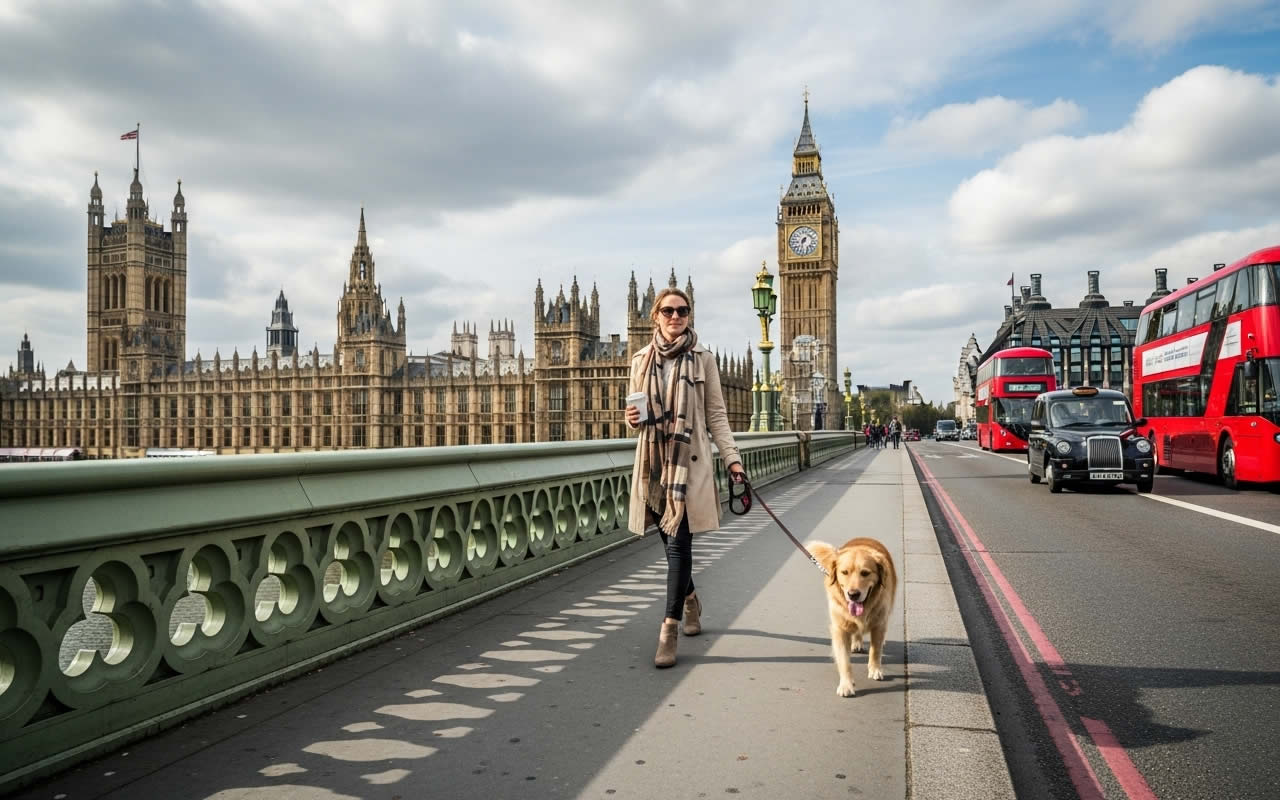
Traveling internationally with your pet from the USA to the United Kingdom involves navigating detailed and evolving import regulations. The UK’s Pet Travel Scheme (PETS) requires strict compliance with DEFRA and USDA requirements to protect public and animal health. Proper preparation ensures a safe and smooth relocation for your dog or cat.
Preparing Your Dog or Cat for Travel from the USA to the United Kingdom
The UK is rabies‑free, which means pets must meet precise criteria before entry. This includes ISO microchipping, rabies vaccination with mandatory waiting periods, a health certificate endorsed by USDA APHIS, tapeworm treatment for dogs, and entry via an approved route such as London Heathrow Airport.
While there is no mandatory quarantine if all rules are met, any error in timing, documentation, or route may result in quarantine or denied entry at the pet owner’s expense.
From microchip to tapeworm treatment and airline transport logistics, the following guide walks through every required step to prepare your pet’s journey to London.
"When moving pets to the UK, following DEFRA’s import requirements to the letter is critical. A small mistake—even the wrong microchip or vaccination timing—can result in delays or quarantine."
Steps to Meet UK Pet Import Requirements
1. Microchip & Rabies Vaccination
Your pet must be microchipped with an ISO 11784/11785‑compliant implant before the rabies vaccine is administered. The rabies vaccination must be given at least 21 days before travel. Note: a three‑year vaccine is acceptable only in the first year; otherwise, a booster reset may be required to maintain validity for UK entry. A detailed rabies certificate with microchip number, manufacturer, product name, and dates must accompany the pet :contentReference[oaicite:1]{index=1}.
2. USDA‑Accredited Vet Health Certificate (AHC)
A USDA‑accredited veterinarian must issue the correct health certificate (non‑commercial or commercial) depending on number of pets and timing relative to owner’s arrival. Non‑commercial certificates are valid for 10 days after APHIS endorsement; commercial certificates must be issued and endorsed within narrower windows (24–48 hours) :contentReference[oaicite:2]{index=2}.
3. APHIS Endorsement of Health Certificate
After your vet completes the certificate, you must have it endorsed by USDA APHIS. For non‑commercial travel, this must occur within 10 days of arrival in the UK; for commercial travel, endorsement must occur within 48 hours before departure :contentReference[oaicite:3]{index=3}.
4. Tapeworm Treatment (Dogs Only)
If traveling with a dog, treatment against Echinococcus multilocularis (typically praziquantel) is required between 24 and 120 hours before arrival. The treatment must be administered by a USDA‑accredited vet and fully documented on the AHC :contentReference[oaicite:4]{index=4}.
5. Approved Entry Route & Airline Cargo
PETS rules mandate pets enter the UK as manifest cargo using an approved airline and route. London Heathrow is the most frequently used entry point, processed through the Heathrow Animal Reception Centre (HARC). Pets cannot travel in cabin or as checked baggage on arrival flights :contentReference[oaicite:5]{index=5}.
6. Crate Standards & Airline Preparation
Crates must meet International Air Transport Association (IATA) standards: allow the pet to stand, turn around, lie down comfortably, with sufficient ventilation on all sides and fixed food/water dishes. Sedation is discouraged due to the risk of respiratory or circulatory issues :contentReference[oaicite:6]{index=6}.
Common Challenges & How to Avoid Them
- Using a non‑ISO microchip or implanting after rabies vaccination.
- Not observing the full 21‑day waiting period post-rabies shot.
- Missing endorsements or issuing the wrong type of health certificate.
- Incorrect or missing tapeworm treatment documentation.
- Booking unapproved airlines or entry airports.
Any of these missteps can lead to denied entry, quarantine, or extra fees at customs. Thorough planning is essential.
Timeline for Owners Traveling with Your Pet
Ideally, begin planning 4–8 weeks before travel. Steps such as microchip and rabies vaccination must be scheduled earliest. Health certificates and tapeworm treatment happen within the final 10 days. Airlines and cargo must be booked well in advance, especially during peak seasons.
No-Quarantine Zone: UK vs. EU Passports
The UK accepts the US as a listed country under PETS, meaning no quarantine is required if PETS requirements are met. Although EU pet passports are not valid for pets arriving from the US, proper documentation via AHC endorsed by USDA is fully accepted :contentReference[oaicite:7]{index=7}.
Further Resources & External Links
More detailed guidance is available from authoritative sources:
gov.uk – Bringing your pet dog, cat or ferret to Great Britain
USDA APHIS – Pet Travel: US to UK export rules
PetRelocation expert guide to moving pets to the UK
Trusted Pet Transport & Documentation Services
For professional support, Across The Pond Pets pet travel services offers end-to-end logistics, paperwork assistance, USDA endorsement help, and airline coordination.
They also provide comprehensive international pet shipping from the USA to the UK—including customs clearance and personalised care throughout the journey.
Internal SEO Links for Further Info
- Consultation services – for expert advice and planning support.
- Client reviews – real stories from pet owners who’ve moved pets internationally.
Conclusion
Bringing your dog or cat from the USA to London requires strict adherence to UK PETS rules: ISO microchip, rabies vaccination with the correct waiting period, APHIS-endorsed health certificate, tapeworm treatment for dogs, and approved airline cargo entry. With attention to timing, documentation, and logistics, you can avoid quarantine and ensure your pet’s journey is safe and successful. If desired, hiring a relocation expert can help further reduce the risk of errors and streamline the process.
